
- REGENORTHOSPORT BANGALORE
Non-Surgical Alternatives to Total Knee Replacement
Find advanced treatment options to manage knee pain, improve mobility and preserve your natural knee without immediate surgery.
Understanding Total Knee Replacement
Advanced knee osteoarthritis
Severe cartilage damage
Bone-on-bone joint degeneration
Previous knee injuries
Meniscus and ligament damage
Persistent knee pain
Significant loss of mobility
Difficulty performing daily activities
Common Symptoms of Advanced Knee Damage
When Should You See a Knee Specialist?
Conditions That Can Lead to Total Knee Replacement
Knee Osteoarthritis

Symptoms
- Gradual knee pain
- Morning stiffness
- Swelling
- Reduced mobility
- Difficulty walking
- Difficulty climbing stairs
Causes
Diagnosis
Non-Surgical Treatment
Cartilage Damage
Symptoms
- Persistent knee pain
- Swelling
- Stiffness
- Reduced range of motion
- Pain during activity
Causes
Diagnosis
Non-Surgical Treatment
Meniscus Tear
Symptoms
- Knee pain
- Clicking
- Locking
- Swelling
- Pain while twisting
Causes
Diagnosis
Non-Surgical Treatment
Ligament Injuries
Symptoms
- Knee instability
- Pain
- Swelling
- Difficulty pivoting
- Feeling that the knee gives way
Causes
Diagnosis
Non-Surgical Treatment
Patellofemoral Pain Syndrome
Symptoms
- Pain around the kneecap
- Pain while squatting
- Difficulty climbing stairs
- Pain after prolonged sitting
Causes
Diagnosis
Non-Surgical Treatment
Signs You Shouldn't Ignore
- Persistent knee pain
- Pain while walking or standing
- Repeated swelling
- Morning stiffness
- Clicking, catching or locking
- Knee instability
- Difficulty climbing or descending stairs
- Difficulty bending or straightening the knee
- Reduced range of motion
- Pain that affects sleep
- Difficulty performing everyday activities
How We Diagnose Knee Problems Before Knee Replacement
Medical History
Physical Examination
X-rays
MRI
Ultrasound
Functional Assessment
Non-Surgical Alternatives to Total Knee Replacement
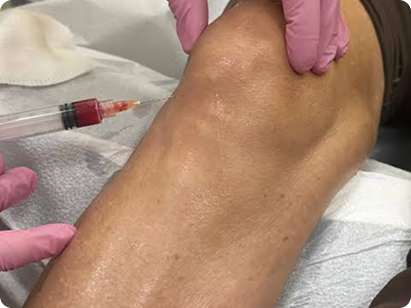
High-Concentrated PRP Therapy
How It Works
High-Concentrated PRP uses a concentrated preparation of the patient’s own platelets containing growth factors. The High-Concentrated PRP is prepared and injected into the affected area using appropriate image guidance to support the body’s natural healing response.
Benefits
- Helps manage knee pain
- Supports improved function
- Supports the body's healing response
- Uses the patient's own blood
- Performed as an outpatient procedure
Recovery
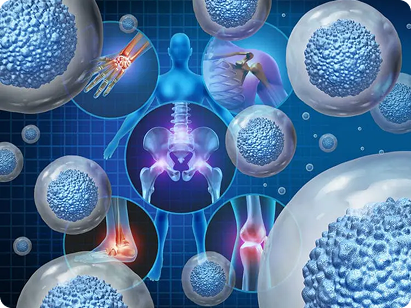
Stem Cell Therapy
Ideal Candidates
- Cartilage damage
- Knee osteoarthritis
- Certain sports injuries
- Joint degeneration
- Patients seeking non-surgical treatment options
Procedure
Benefits
- Supports the body's healing environment
- Helps manage pain
- Supports joint function
- Focuses on preserving the natural knee
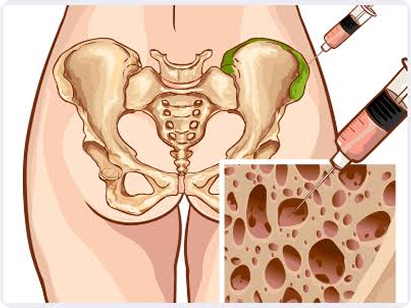
Bone Marrow Concentrate (BMAC)
Bone Marrow Concentrate is a regenerative orthopedic treatment that concentrates cells and other components from the patient’s own bone marrow. It is used for appropriate cartilage injuries, osteoarthritis and complex joint conditions.
Potential benefits
- Supports pain management
- Supports joint function
- Provides a healing environment
- Supports natural joint preservation
- Supports functional recovery
Treatment selection depends on the diagnosis, imaging findings, severity of the condition and overall health.
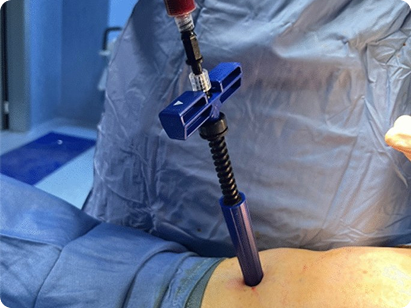
Platelet Lysate Therapy
Potential Benefits
- Supports tissue healing
- Helps manage pain
- Supports recovery
- Helps create a favorable healing environment
Who Is a Good Candidate for Non-Surgical Knee Treatment?
Non-surgical treatment can be considered for people with:
A thorough evaluation is necessary to determine the most appropriate treatment.
1Mild to moderate knee osteoarthritis
2 Cartilage damage
3Meniscus injuries
4Ligament injuries
5 Tendon problems
6 Sports-related knee injuries
7Persistent knee pain despite conventional treatment
8A goal of preserving the natural knee
9A desire to explore alternatives before knee replacement
Why Choose
RegenOrthoSport?
Specialized Orthopedic Expertise
Our specialists focus on orthopedic and sports-related conditions and provide comprehensive evaluations before recommending treatment.
Regenerative Medicine Focus
We offer advanced image-guided regenerative treatments, including High-Concentrated PRP , Bone Marrow Concentrate (BMAC) and Platelet Lysate, for appropriate orthopedic conditions.
Personalized Care
Every treatment plan is based on the patient's diagnosis, activity level, lifestyle, symptoms and recovery goals.
Advanced Diagnostics
Clinical evaluation, imaging and functional assessment help establish an accurate understanding of the knee before treatment begins.
Rehabilitation Support
Treatment is supported by structured rehabilitation programs designed to improve strength, mobility and long-term knee function.
Evidence-Based Protocols
Our approach combines clinical evidence, physician expertise, advanced diagnostics and individualized care to recommend the most appropriate treatment.
Benefits of Non-Surgical Knee Treatment
- Helps manage pain and improve mobility
- Focuses on preserving the natural knee
- Provides an alternative to immediate surgery when appropriate
- Avoids an artificial joint implant
- Allows personalized treatment and rehabilitation
- Image-guided treatment for improved treatment accuracy
Your Recovery
Within Days
Follow personalized activity and recovery instructions while returning to appropriate daily activities.
Within Weeks
Gradually work on mobility, strength and function through rehabilitation.
Within Months
Continue building strength, mobility and knee function with a structured recovery program.
- Our Regenerative Specialists
Care led by experienced physicians
Dr. Venkatesh Movva
Founder, RegenOrthoSport
Dr. Venkatesh Movva is the Founder of RegenOrthoSport and a fellowship-trained Sports Medicine Physician and Board-Certified Pain Management Specialist with more than three decades of clinical experience.
He has dedicated his career to helping patients find effective alternatives to surgery through advanced regenerative medicine and evidence-based orthopedic care. His expertise spans sports injuries, joint preservation, spine conditions, and regenerative orthopedic procedures.
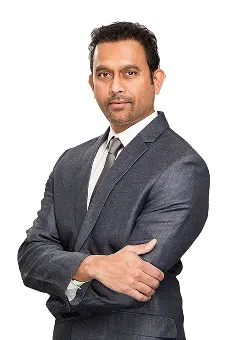

Dr. Vithal Kulkarni
Regenerative pAIN Specialist
- Voice of Trust
Testimonials
- Frequently Asked Questions
Frequently asked
questions
What is the alternative to total knee replacement?
Can knee replacement be avoided?
Knee replacement is not automatically required for every person with knee arthritis. Patients with appropriate levels of joint damage can explore non-surgical treatment options before considering surgery.
What is non-surgical knee replacement treatment?
Can High-Concentrated PRP help with knee arthritis?
High-Concentrated PRP is used in orthopedic care for appropriate knee arthritis cases to help manage pain and support joint function. A doctor evaluates the severity of arthritis and recommends the appropriate treatment.
Can stem cell therapy help delay knee replacement?
What is Bone Marrow Concentrate for knee arthritis?
Can BMAC be used instead of knee replacement?
What is Platelet Lysate therapy for the knee?
Can cartilage damage be treated without knee replacement?
Can meniscus tears be treated without surgery?
How do I know if I need total knee replacement?
Is knee replacement the only treatment for bone-on-bone arthritis?
Can regenerative medicine help knee pain?
How long does recovery take after High-Concentrated PRP or BMAC?
Can I walk after regenerative knee treatment?
Will I need physiotherapy after regenerative treatment?
Is regenerative treatment suitable for severe knee arthritis?
How is knee arthritis diagnosed?
Can non-surgical treatment preserve my natural knee?
Why choose RegenOrthoSport for alternatives to knee replacement?
Visit RegenOrthoSport Bangalore
Bangalore Clinic –
No. 771, Hothur Grand, 100 Feet Rd, HAL 2nd Stage, Doopanahalli, Indiranagar Bengaluru, Karnataka 560038